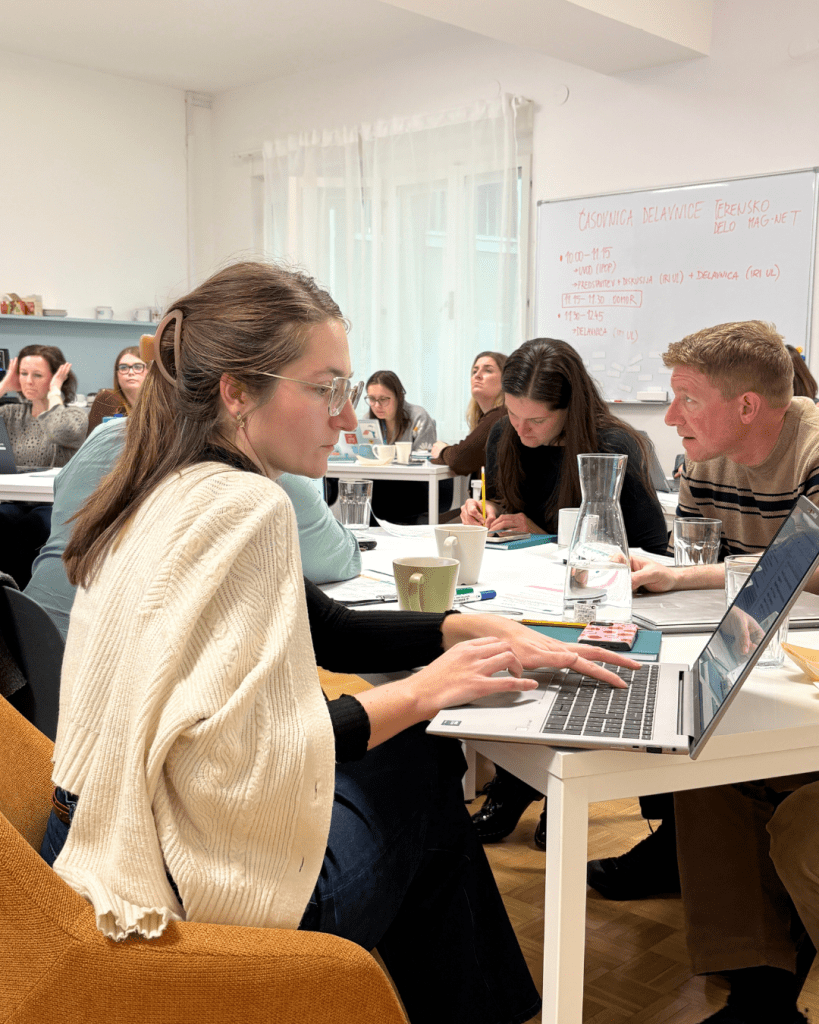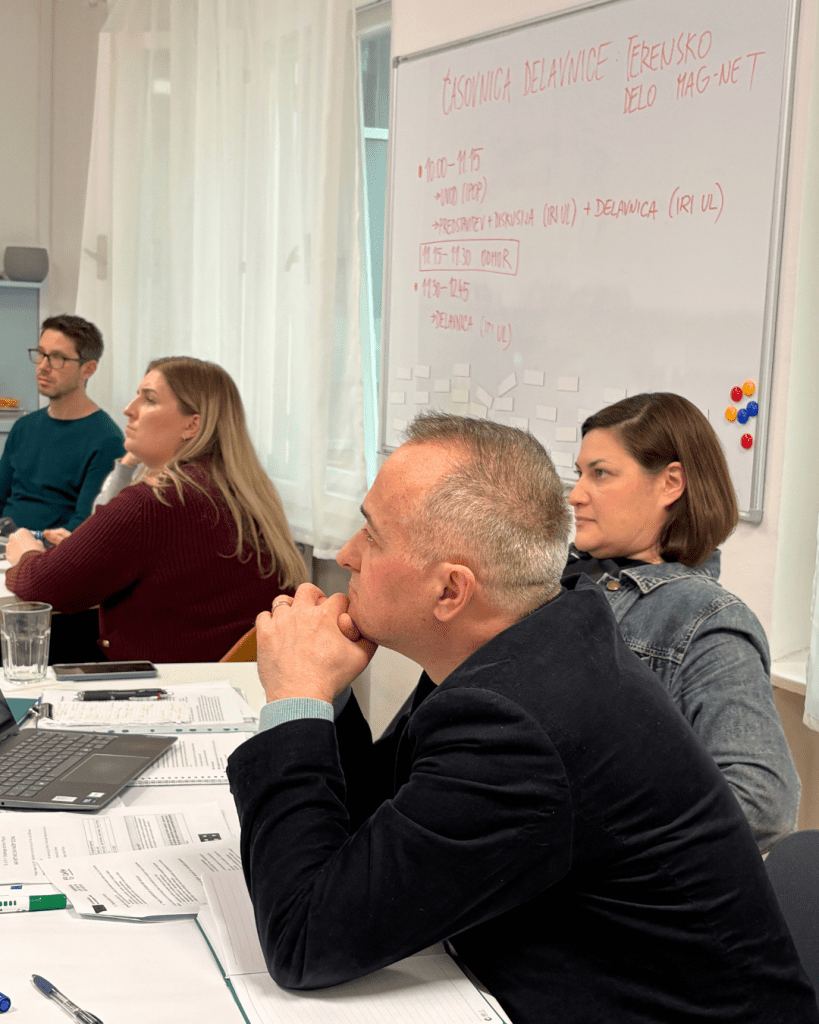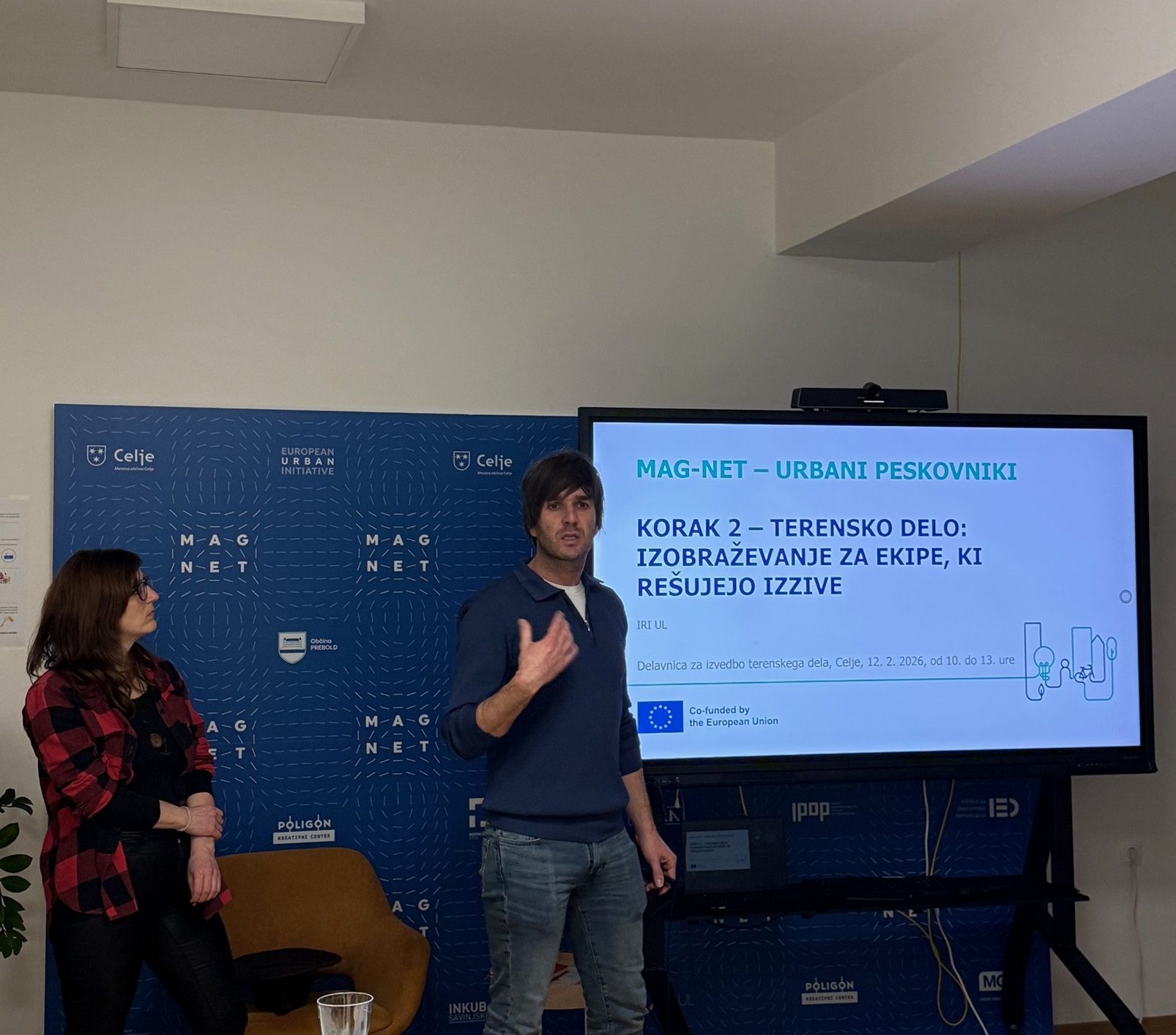
On 12 February, a workshop was held under the guidance of three researchers from IRI UL for the working teams of the MAG-NET alliance, which are developing solutions across five key areas: sustainable mobility, urban atmosphere, energy communities, housing accessibility, and Industry 4.0.
The workshop marked the transition from the first to the second phase of the Urban Real-Life Learning Lab (U-RLLL) methodology, developed at IRI UL as one of MAG-NET’s central methodological contributions. The methodology consists of four interconnected steps: defining the challenge, conducting field research, participatory solution design, and prototyping, testing, and implementing solutions.
In the first step, which concludes in March, the teams identified key challenges within their thematic areas, analysed relevant documents and data, and engaged key stakeholders in the discussion. From April to July, the process continues with field research. The aim of this phase is no longer to define the challenges, but to understand the everyday practices, needs, barriers, motivations, and expectations of residents in relation to the challenge. The upcoming phase of MAG-NET will therefore focus on how people experience these five challenges and how they influence their daily lives.
The fieldwork will rely on qualitative methods commonly used in ethnography, such as focus groups, semi-structured interviews, participant observation, and on-site conversations. This approach will enable in-depth, context-rich insights into residents’ experience of the urban environment and will complement existing data, studies, and analyses on the challenges. The findings from the field research will provide the basis for the third phase—participatory solution design—in which teams, together with citizens and other stakeholders, will develop initial solution proposals. This will be followed by prototyping and real-life testing, with the aim of developing concrete, feasible, and socially supported solutions for Celje.