

What makes people want to stay in a city, return to it or build their future there? Celje’s experiments with urban atmosphere offer five very human lessons.
What gives a city its soul?
It is an unusual question to ask in an urban innovation project. We tend to talk about housing, jobs, skills, mobility and infrastructure. Yet when people decide where to build their lives, something far less tangible enters the equation.
A feeling.
A pull we can’t explain. A sense that something is happening. That there are people to meet and possibilities to explore. That an idea might become something real. That this is somewhere you can belong and somewhere you can make a difference.
In Celje, Slovenia, the MAG-NET project is exploring how a smaller European city can become more attractive to the people and talent it needs for its future.
And one of Celje’s most unconventional former residents offers an intriguing place to begin.
Alma M. Karlin was a writer, gifted linguist and explorer who left Celje in 1919 on an extraordinary eight-year journey around the world. At a time when independent travel by a woman was itself remarkable, she chose a path far beyond the conventions of her time.
Her story speaks of three qualities that feel surprisingly relevant to cities today:
Openness. Courage. Curiosity.
So, what can other cities learn from what is happening in Celje?
1. Start with people
During a recent site visit to Celje, we talked about what people-centred design actually means in practice. The message was refreshingly simple: instead of sitting in a room deciding what people need, go and meet them. Talk to them. Understand how they live. Develop ideas together and be prepared to change those ideas as you learn.
Or, as it was put during the visit: “Not solutions for people, solutions with people.”
MAG-NET’s “MAG-NETic teams” (cross-sectoral stakeholder groups focussed on a series of thematic challenges namely mobility, housing, urban vibe, higher value jobs and energy) are putting this thinking into practice by bringing people from different organisations, professions and parts of society together around real urban challenges.
A magnetic city is afterall, something people help to create.
2. Give people reasons to experience their city differently
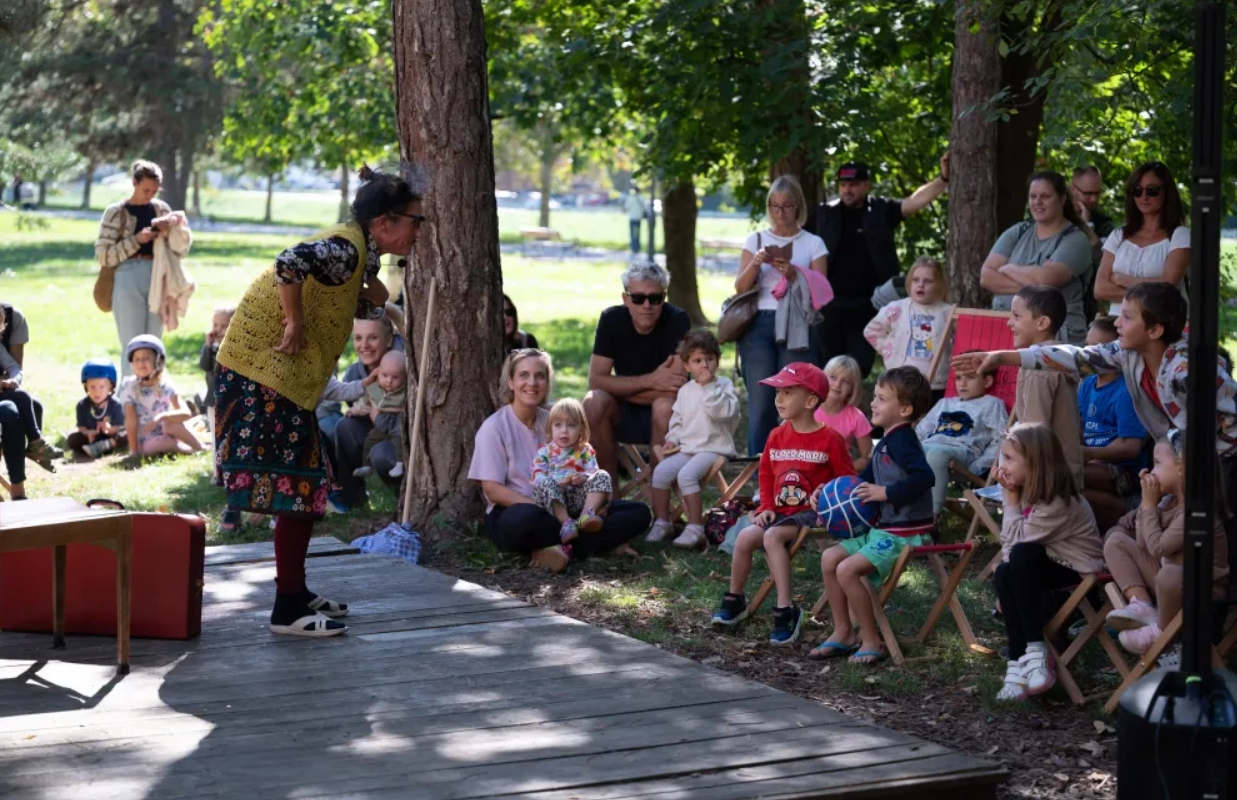
In September, Celje tested this idea through the first ALMA Festival, the first pilot emerging from MAG-NET’s Urban Atmosphere challenge.
Over five days, 28 events across 14 venues attracted 1,602 visitors.
Music, film, literature, photography, food, travel and storytelling spilled across the city, from the Savinja Riverside and City Beach to cultural venues, the City Forest and places connected with Alma herself.
For five days, Celje became somewhere to wander, encounter, discover and participate.
Urban atmosphere can sound abstract. ALMA makes it tangible.
3. Remember that a city’s greatest asset may be its people
Just over a week later, Celje hosted the EUI Policy Lab “Where People Choose to Stay: Creating Resilient Cities.”
Close to 100 people arrived from cities across Europe to explore a question confronting places across the continent: how do we create cities where people can see a future for themselves?
Then they experienced Celje.
The warmth. The hospitality. The authenticity. The wonderful food. The intimacy of a city where things feel close and connected.
Above all, they encountered an extraordinary young team.
Their energy, openness, motivation and commitment left a real impression on the people who came. During one of my visits, somebody described what is happening in Celje as a “spring of hope.”
Knowing the team as I do, it is easy to understand what they meant.
Cities invest enormous effort in attracting talent. Sometimes we should look more closely at the talented, committed people (the lifeforce) already quietly transforming the places where they live.
4. Have the courage to become more yourself
Smaller cities often ask how they can compete with capitals and larger urban centres.
I think we need to change the question:
What can our city offer precisely because it is different?
Celje does not need to become a smaller Ljubljana, Vienna, Amsterdam or Berlin.
It is human in scale. Nature is close. Journeys are short. People can connect quickly. It has history, culture, gastronomy, enterprise and a growing community of people who want to make things happen.
These are ingredients from which a distinctive urban experience can grow.
There is bravery in that too: resisting the temptation to copy and becoming more confident in your own identity.
Alma Karlin certainly understood the courage required to choose your own path.
5. Find your alma
There is a lovely linguistic coincidence at the centre of this story.
In Spanish, alma means soul.
The ALMA Festival is named after Alma Karlin, of course, but the coincidence feels wonderfully fitting.
Perhaps the soul of a city lives in the relationships between its people.
In someone deciding to create something that did not exist before. In institutions choosing to collaborate. In young people being trusted with responsibility. In a public space suddenly filled with music. In somebody asking, “Why don’t we try this?” and others deciding to join them.
That brings us back to Alma Karlin.
More than a century ago, she left Celje with the courage and curiosity to discover the world.
Today, there is something of that same spirit in the people shaping her hometown: open to new ideas, curious about what could be possible and brave enough to try.
Perhaps Alma’s journey belongs to more than Celje’s past.
Maybe that is where the search for a more magnetic city begins: understanding what is distinctive about your place, valuing the people already shaping it and having the confidence to follow your own path.
And it leaves us with a question that every city might ask:
What is it about our city that people could fall in love with?
Perhaps finding the answer begins with understanding the soul of the place, and giving it the space to flourish.
Eileen Crowley, Expert in Urban Innovation